4News
Location: Home ->  News
2025
-
11
-
25
During lathe machining, operational details must be strictly controlled across four core dimensions: safety precautions, equipment preparation, machining operations, and quality monitoring. Key points are as follows: I. Safety Precautions: Mitigating Personnel and Equipment Risks Personal Protective Equipment (PPE) Wearing Standards: Before operation, wear tight-sleeved work clothes and safety shoes; wear protective goggles and a work cap. Female workers must tie back hair and wear work caps. Gloves, scarves, ties, or loose clothing are strictly prohibited to prevent entanglement in rotating components. Tool Usage: Use iron hooks or brushes to clear chips; never touch chips with bare hands. When finishing workpieces with files, position the right hand forward and left hand backward. When sanding with emery cloth, use the "
2025
-
11
-
25
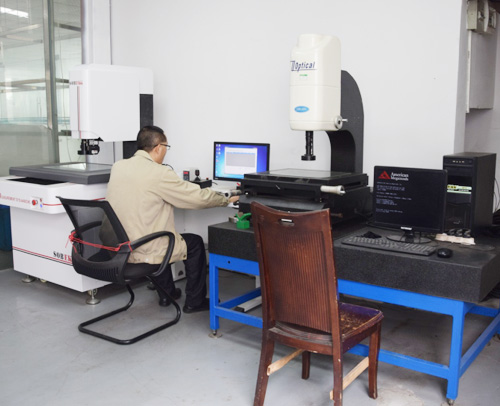
After lathe machining is completed, quality inspection is a critical step to ensure products meet design requirements. Inspection must cover multiple dimensions including dimensional accuracy, geometric accuracy, surface quality, and functional characteristics, utilizing scientific methods and tools. Below is the detailed process and key points for lathe machining quality inspection: I. Pre-Inspection Preparation Define Inspection Standards Determine critical requirements based on drawings, technical agreements, or industry standards (e.g., ISO, GB), including dimensional tolerances (e.g., ±0.01mm), geometric tolerances (e.g., roundness ≤0.005mm), and surface roughness (e.g., Ra ≤0.8μm). Example: Shaft components require inspection.
2025
-
11
-
25
To enhance operational efficiency, lathe manufacturers must implement comprehensive strategies across multiple dimensions, including equipment optimization, process improvement, production management, personnel skills, and digital application. Specific strategies and implementation points are outlined below: I. Equipment and Tool Optimization Upgrade CNC Lathes High-Speed, High-Precision Models: Select CNC lathes with spindle speeds ≥8000 rpm and feed rates ≥30 m/min to reduce per-piece processing time. For example, machining a φ50mm shaft takes 3 minutes per piece on a traditional lathe but can be compressed to 1.5 minutes per piece on a high-speed model. Multi-Axis Interpolation Capability: Utilize four- or five-axis lathes to complete complex curved surface machining in a single setup.
2025
-
11
-
25
During lathe machining and cutting processes, meticulous attention to detail directly impacts machining accuracy, surface quality, tool life, and operational safety. The following systematically outlines key considerations and practical points across four dimensions: process preparation, machining operations, tool management, and safety precautions: I. Process Preparation: Ensuring a Solid Foundation Drawing and Program Review Dimension Tolerance Verification: Confirm whether part dimensions and geometric tolerances (e.g., roundness, concentricity) fall within the lathe's machining capabilities (e.g., conventional lathes typically have roundness errors ≤0.02mm, while CNC lathes can control this to ≤0.005mm). Program Simulation Verification: For CNC lathes,
2025
-
11
-
25
CNC machining (computer numerical control machining) is widely applied across multiple industrial sectors due to its advantages of high precision, high efficiency, and high consistency. Below is a detailed overview of its application areas: 1. Aerospace Industry Core Applications: CNC machining is extensively applied in aerospace, primarily for processing complex curved components such as aircraft engine blades, airframe structures, and turbine discs. These parts demand exceptional precision and performance. CNC machining meets micron-level accuracy requirements, ensuring high reliability and extended service life. Technical Advantages: Utilizing five-axis CNC machining technology enables...
   Total:15  Total Pages:3 | Page1  9First Page   7Previous   Next8   Last Page:  Jump