To enhance operational efficiency, lathe manufacturers must implement comprehensive strategies across multiple dimensions, including equipment optimization, process improvement, production management, personnel skills, and digital application. Specific strategies and implementation points are outlined below:
I. Equipment and Tool Optimization
Upgrade CNC Lathes
High-Speed, High-Precision Models: Select CNC lathes with spindle speeds ≥8000 rpm and feed rates ≥30 m/min to reduce per-part processing time. For example, machining a φ50mm shaft takes 3 minutes per piece on a traditional lathe but can be compressed to 1.5 minutes per piece on a high-speed model.
Multi-axis Interpolation Capability: Employ four- or five-axis lathes to complete complex surface machining in a single setup, minimizing re-clamping errors and time. For instance, multi-axis machines boost efficiency by 40% when machining turbine blades.
Automated Accessories: Integrate automatic loading/unloading systems (e.g., robotic arms) and powered tool turrets (supporting combined drilling/milling operations) to reduce manual intervention.
Tool Management
Coated carbide tools: Utilize TiAlN-coated tools, extending tool life by 3-5 times compared to standard tools and reducing tool change frequency. For instance, when machining stainless steel, coated tools can process 200 pieces per cycle, while standard tools manage only 50 pieces per cycle.
Tool magazine optimization: Employ disc or chain-type tool magazines to reduce tool change time to under 1 second (traditional magazines require 3-5 seconds).
Tool Presetter: Offline tool dimension measurement reduces machine downtime for tool setup.
In-Process Inspection Technology
Workpiece Probe: Install probes like Renishaw OMP40 for real-time dimensional measurement on the machine. Automatic compensation for out-of-tolerance parts prevents batch scrap. For example, shaft diameter inspection reduces measurement time from 5 minutes per part to 10 seconds per part.
Laser Interferometer: Periodically calibrates machine tool geometric accuracy (e.g., straightness, perpendicularity) to ensure long-term machining stability.
II. Process and Programming Optimization
Cutting Parameter Optimization
High-Speed Cutting (HSC): Increases spindle speed and feed rate to reduce cutting forces. For example, when machining aluminum alloy, raising cutting speed from 200 m/min to 600 m/min triples material removal rate.
Dry Cutting: Utilize carbide tools and high-pressure coolant to minimize lubricant usage and cleaning time. For example, dry cutting steel reduces cleaning time per part from 2 minutes to 0.5 minutes.
Parameter Databases: Establish cutting parameter libraries (e.g., Sandvik Coromant's CoroPlus ToolGuide) to automatically recommend optimal parameters based on material and tool type.
Programming Strategies
Macro Programs and Cycle Commands: Utilize commands like G76 threading cycles and G73 drilling cycles to reduce program line counts. For instance, the G76 cycle compresses threading programs from 50 lines to 10 lines.
Simulation Software: Employ VERICUT or Mastercam to simulate machining processes, identifying collisions and overcutting issues in advance to minimize trial runs.
DNC Transmission: Utilize RS232 or Ethernet Direct Numerical Control (DNC) for large program transfers, eliminating interruptions from USB drive copying.
Process Consolidation
Multi-Tasking Machining: Integrate turning, milling, drilling, and other operations onto a single machine. For instance, when machining valve bodies, multi-tasking machines reduce clamping by two operations, cutting total machining time from 4 hours to 2.5 hours.
Modular Fixtures: Design quick-change fixtures (e.g., zero-point positioning systems) to reduce changeover time from 30 minutes to 5 minutes.
III. Production Management and Process Optimization
Lean Production
5S Management: Sort (Seiri), Set in Order (Seiton), Shine (Seiso), Standardize (Seiketsu), Sustain (Shitsuke) to minimize tool/material search time. Example: After implementing 5S, tool setup time decreased from 15 minutes per cycle to 5 minutes per cycle.
One-Piece Flow: Reduced batch sizes to 1-2 pieces, minimizing work-in-process inventory. Example: Traditional 100-piece batches had a 3-day WIP cycle time; one-piece flow reduced this to 0.5 days.
Kanban System: Visually manages materials and process statuses to promptly reveal bottlenecks. For example, when kanban indicates a 5-piece backlog at a process, resources are immediately reallocated for support.
Production Scheduling Optimization
APS (Advanced Planning and Scheduling): Dynamically adjusts production schedules based on order priority, machine load, and delivery deadlines. For example, after implementing Preactor software, equipment utilization increased from 65% to 85%.
Batch Production of Similar Parts: Group parts with similar materials and dimensions into the same processing batch to reduce tool and material changeover time. For example, batch processing 10 types of φ30-φ50mm shaft parts reduced changeover frequency from 10 times to 2 times.
Supply Chain Collaboration
JIT (Just-in-Time) Delivery: Coordinate hourly deliveries of raw materials and cutting tools with suppliers to minimize inventory holding. For example, after implementing JIT, raw material inventory was reduced from 30 days to 5 days.
VMI (Vendor-Managed Inventory): Suppliers manage materials in workshop-adjacent warehouses, replenishing stock on demand. For example, under VMI, cutting tool shortage rates decreased from 5% to 0.5%.

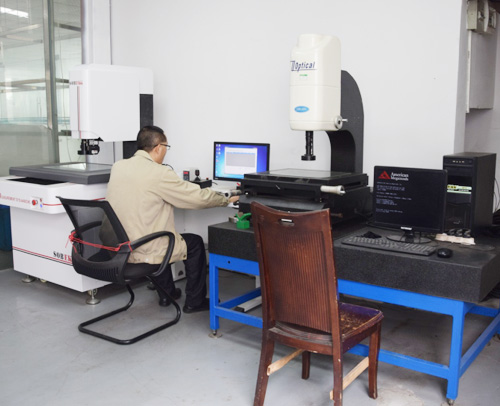 About ZhenggongZhenggong Electronics (Dongguan) Co., Ltd. is a specialized enterprise dedicated to the precision machining and manufacturing of high-accuracy components.view more
 News CenterFollow Zhenggong Electronics for real-time updates on the latest in high-precision component machining.view more